The short answer
A useful fault record identifies the location, timing and effect on normal use. It gives the electrician a starting point without requiring you to touch suspect equipment, reproduce the event or decide what caused it.
01 / In practice
Use a simple timeline
Record when the issue was first noticed, whether it is continuous or intermittent, and which room or equipment was involved. Distinguish an exact time from an approximate recollection. Keep the description literal: lights dimmed is an observation; the panel is overloaded is a diagnosis the observation does not establish.
02 / In practice
Keep context separate from cause
List recent building work, appliance changes or weather events only as context. Ask the professional whether those details matter. Avoid repeatedly starting equipment or resetting protection to demonstrate the problem. Existing photos and invoices can help without collecting new evidence through unsafe access.
03 / In practice
Carry the record into the repair
Give the same notes to the person carrying out the assessment. Ask the final record to identify the original complaint and whether further monitoring or investigation remains. A symptom disappearing during one visit does not necessarily explain why it occurred.
04 / In practice
Describe the consequence precisely
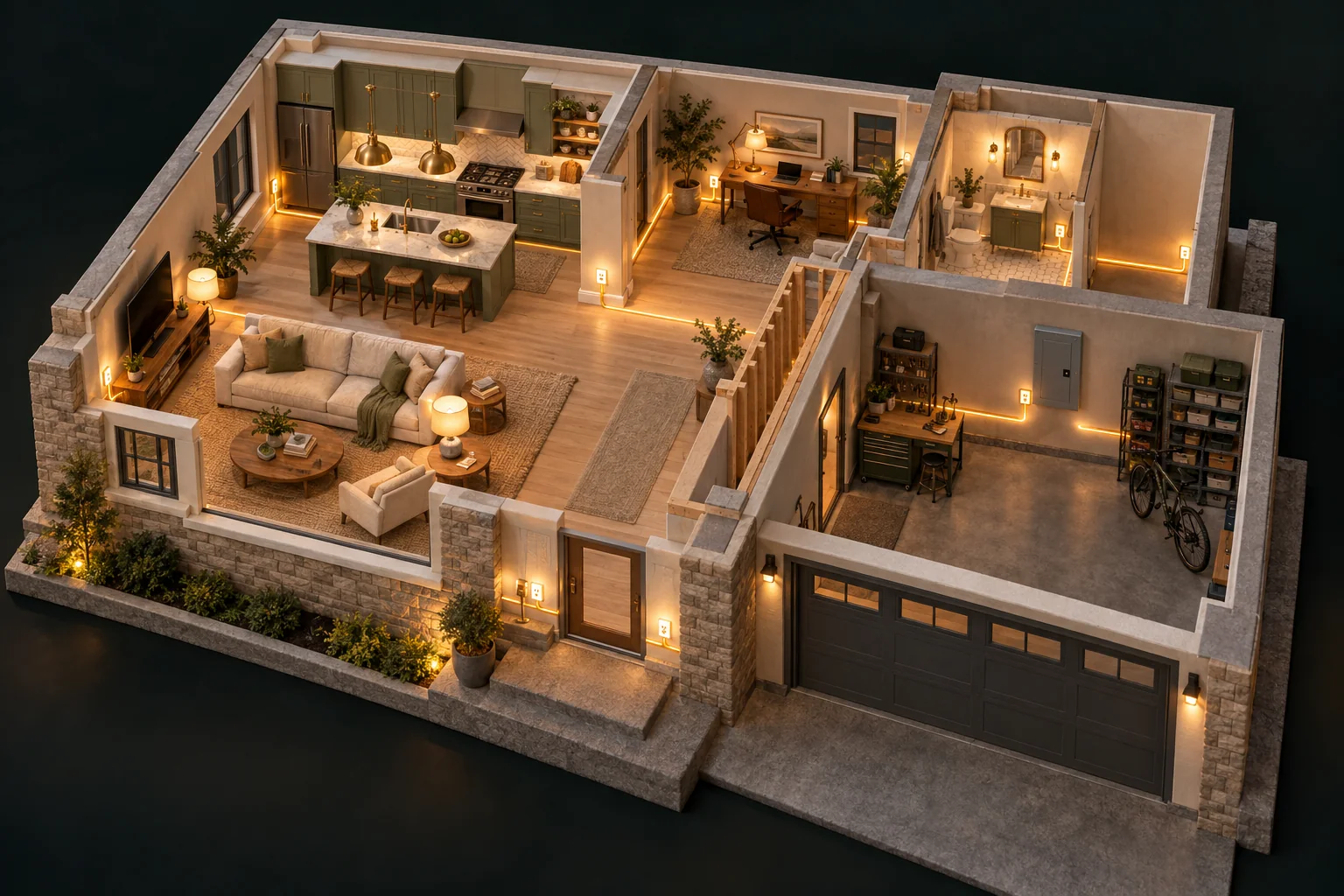
Write “the kitchen island receptacles stopped supplying the appliances already connected” rather than “the kitchen has no power” if the ceiling lights still worked. The distinction changes the question the electrician needs to investigate. Include what remained available only when that was apparent in ordinary use. A floor plan marked with the affected locations can be clearer than a long message, particularly when similar room names appear on several floors.
05 / In practice
Preserve separate witnesses
When two people noticed different events, keep their accounts separate. One occupant may have seen a light dim while another discovered a stopped freezer later. Combining those accounts into a single simultaneous failure could misdirect the assessment. Record whether a time came from a clock, an appliance alert or memory. Attach an existing photo of a damaged exterior only if it was taken safely; a useful brief never depends on opening a cover.
06 / In practice
Make the history usable at the appointment
Place the latest complaint above older invoices, then identify which earlier work involved the same location. Ask the attending professional to say whether the issue was present during the visit and which observations informed the conclusion. If nothing happened while they attended, request a specific follow-up plan rather than a broad assurance. For immediate smoke, fire or an electrical shock, move clear and call 911; collecting notes can wait.
Questions to take into the assessment
- What was directly observed?
- Which details are uncertain or approximate?
- What previous records are available?
Common questions
Should I send a video of the fault?
An existing safely captured recording may help. Do not recreate a fault or approach suspect equipment to obtain a better recording.
What if I cannot identify the circuit?
Use the room and device location. Tell the electrician the circuit identity is unknown instead of treating an old panel label as established fact.
Official sources
- City of Calgary: electrical and plumbing permit requirements ↗
- Alberta Tradesecrets: compulsory certification trades ↗
- ENMAX Power: outages, reporting and electrical safety ↗
- FortisAlberta: outage reporting and contact information ↗
- FortisAlberta: distribution service area ↗
- Alberta: permits and the safety codes system ↗
- City of Airdrie: why permits are required ↗
- Town of Cochrane: building permits and inspections ↗
- City of Chestermere: building and utility permit applications ↗
- Town of Okotoks: building and renovation permits ↗
- Rocky View County: inspection requirements ↗
- Rocky View County: myBuild permit portal ↗
- Foothills County: building permits and inspections ↗
- Alberta: repairs and entry during a tenancy ↗
- ENMAX Power: safety at home ↗
- Rocky View County: Bearspaw community and utility information ↗
- Rocky View County: Langdon area servicing review ↗
- Foothills County: municipal plans and Priddis location context ↗